
Rest and Recovery with Rowan Treece


What helps you recover from a physically strenuous day? Maybe enjoying a satisfying meal, doing some gentle yoga, or sinking into a soothing bubble bath. While physical self-care after a long day is something everyone benefits from, it's an activity that dancers are particularly familiar with.
Every dancer takes their own approach to everyday recovery, but BTM demi-soloist Rowan Treece has her self-care routine down to a science. You might remember her previous appearance on the blog, describing how she came back from a major ankle injury.

Recovering from an injury can feel like a traumatic setback for an early-career professional, but it is often what inspires dancers to learn how to best care for their bodies. As Rowan would attest, the opportunity to learn from a physical therapist and develop self-care tools can make all the difference in a dancer's long-term development.
It's something Rowan and I talk about a lot, and she was kind enough to share her recovery habits with the blog. Although this is not a medical recommendation—neither Rowan nor I are doctors—it's an interesting window into one dancer's approach. Keep reading to also hear from physical therapist Dr. Ashley Simmons, a member of BTM's Medical Arts Team.
The routine
Rowan says, "I usually spend 30-45 minutes a day focused on recovery and self-care. Every day is different depending on what I’m dancing and where my pain and strain are.

Self-massage with a foam roller, balls of various sizes, and a Theragun is crucial before class, during any downtime, and after I get home for the day. I try to also squeeze in some physical therapy exercises for maintenance and warm-up before class.
At lunch, I usually put on compression ankle socks to delay swelling and ensure my feet fit in my pointe shoes for afternoon rehearsals! If I work at a restaurant or teach ballet in the evening, I wear knee-high compression socks.

Once I am home for the night, I will lie or stand on an acupressure mat, apply a heating pad to tight muscles, and/or use a pair of air compression boots to boost circulation. I frequently use silicone cups for fascia release - they are effective for loosening particularly stubborn muscle knots in places that are difficult to attack with a ball or roller, like my shins and inner ankles. A Graston tool is helpful to scrape my peroneals (outer shin muscles) when they are especially tight. I have exercises for self-adjustment to realign my pelvis, which often twists due to tightness in my back and hips.
My TENS (electrical stim) unit comes in handy if my chronic injuries are bothering me. The small electrical current disrupts pain signals before they reach the brain, so I try to only use it when I am feeling discomfort rather than the pain of an injury.
I'll take a hot bath with Epsom salts if I have time, but a hot shower followed by magnesium lotion works in a pinch. I used to stick my feet in a bucket of ice water for ten minutes every night, but recent research indicates that while ice is useful for pain management, it can actually slow down true healing. Now I rely on ice only for acute injury."
The foundation
While all of the tools and techniques of Rowan's recovery routine are helpful, she emphasizes that they are only one piece of the puzzle. "If your body doesn't have the nutrients and fuel it needs to rebuild and the time in which to do it, you’ll still feel terrible in the morning.
My self-care and recovery rely on prioritizing sleep quality and maximizing nutrition. In general, I eat an anti-inflammatory diet and try to avoid rapid glucose spikes that can lead to systemic inflammation. Preliminary research indicates that an imbalance in your gut microbiome can also lead to inflammation and reduce your body’s ability to repair, so I prioritize fermented and probiotic foods and avoid artificial sugars and emulsifiers that can damage gut flora.

Most of all, I prioritize high-quality protein and diverse vegetables with an emphasis on foods rich in omega-3s and antioxidants. I try to meet my needs with whole-food sources, but I do take a few supplements: creatine for muscle retention and neuroprotection, magnesium and inositol for sleep quality, and vitamin D for bone health. I also try to follow good sleep hygiene to ensure body recovery, even if I don’t always get as many hours as I would like. I have red light bulbs in my bedroom lamps to help minimize blue light in the evening, I keep my apartment cold at night, and I try to only use my bedroom for sleep."
The experts
Rowan's routine didn't spring up overnight—in addition to her own independent research, she had help from many expert sources. For any dancer embarking on a recovery regimen, it's important to consult with a professional.
Rowan says, "I’ve worked with some excellent physical therapists over the years, especially Dr. Ashley Simmons, who taught me a lot about self-massage techniques, self-adjustments, and tools like the TENS, cups, and Graston. Working with Enroute Personal Training also taught me effective foam roller and ball techniques in between weight lifting and resistance band sets."
Ashley Simmons, DPT, is one of two physical therapists who regularly work with the company. She and Monique DeLuca, PT, DPT, both bring a wealth of knowledge and experience to their sessions with us.
Dr. Simmons, who runs the private practice Perform for Life Physical Therapy, views recovery as an important component of dancers' performance. She says, "Dancers tend to focus on getting stronger or the thought 'Something must be weak.' In reality, it's often that something is tight or not healthy and needs more self-care rather than more exercise. Shifting to a more balanced approach in the non-dance routine—one that includes hydration, nutrition, and recovery activities—is paramount in keeping a dancer's facility able to perform at the levels they are demanding for as long as they demand it."
Her description that we try to solve our problems with more practice or more strength training is painfully accurate. If 10 bicep curls are good, why not 20? If running your solo twice helps your stamina, why not five times after that?
Unfortunately, our bodies just don't work that way. To make sure we never forget it, Dr. Simmons's practice has a whiteboard that reads "MORE is not BETTER." For dancers, rest and recovery can be overlooked solutions to their challenges.

So where does recovery lead?
Like Rowan, many dancers have complex recovery routines. That much time spent on body maintenance might seem extreme, but it supports everything else that we do. When used in concert with sensible cross-training and proper dance technique, self-care has the power to protect dancers from injury.
Rowan explains, "A good recovery routine is crucial in so many ways. As a professional, there will be days where you have to prioritize your ability to perform in rehearsal over your performance in class. Sometimes your back may be hurting, but you know you have to hit a certain extension or jump in rehearsal so you lower your leg in class to preserve your ability to lift it later. However, class is still where you see the majority of improvement in your dancing, and every day that you can’t push yourself to your maximum in class is a setback in your overall progress. A good recovery routine allows me to have more days where I can give 110% and not limit my activity to preserve my body.
It also ensures that even when I’m pushing through aches and pains, I can (usually) still push through to perform my best on stage. It helps me maintain the quality of my dancing through a show weekend, despite long days, disruption in my routine, and repeated impact on the Maryland Hall stage, which has less rebound than our studio floor. Without a proper recovery routine, closing night would be a mess!

Good recovery also helps me feel my best while I am dancing and gives me time that isn’t just about pushing through discomfort and pain. This not only helps me produce my best, most committed art, but allows me to enjoy the opportunity to dance to the fullest and remember why all the work is worth it. Most of all, in combination with good technique, strength training, and some luck, good recovery will hopefully allow me to dance for many years to come!"
Looking back over Rowan's previous journey with injury, the difference a few years has made is startling. Figuring out her physical self-care has given her a sense of agency over her career, and it's allowed her to push herself in new ways. While there's a lot that goes into taking care of yourself physically, it's well worth it in the end.
Recovery has become even more important for our dancers because our performances of The Nutcracker are fast approaching! We perform for audiences in Hampstead next Sunday, November 22, 2026, at Coppermine Pantherplex. In December, join us for two weekends of performances, December 12-20, 2026, at Maryland Hall in Annapolis.
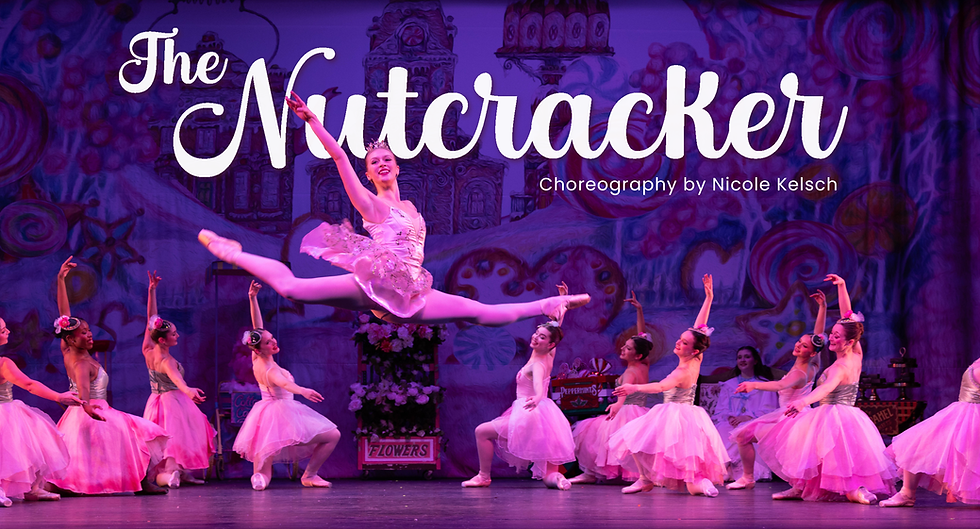
Depending on what show you see, you might catch Rowan as the Ballerina Doll or Rock Candy! Keep an eye on our Nutcracker page for casting updates on all your favorite dancers.

Further Reading
ResearchGate: The Importance of Post-Performance Recovery for a Dancer
Johns Hopkins Medicine: Common Dance Injuries and Prevention Tips
Dance Informa: A Dancer's Best-Kept Secret: Recovery


